Why Cyclists Should Be Fueling Their Rides With More Cookies (Seriously)

Oatmeal Date Cookies (recipe below)
Should you be eating more cookies to fuel your rides? Honestly… probably yes.
Cyclists love talking about their nutrition — gels, chews, bars, rice cakes — but there’s one performance snack that rarely gets the spotlight it deserves:
Cookies. Yep. Homemade cookies. And yes… I’m completely serious.
When considering nutrition, digestibility, cost, flavor, and flexibility, cookies absolutely earn their place as on-bike fuel.
Here’s why your next ride snack might just need to come fresh from your oven.
1. The Macros: Cookies Aren’t That Different From Energy Bars
Most energy bars marketed to endurance athletes sit in a similar nutritional range:
Maurten Solid 160 – 205 calories, 42g carbs, 3g fat, 2g protein
Clif Bar (Chocolate Chip) – 250 calories, 43g carbs, 6g fat, and 10g protein
Honey Stinger Waffle – 150 calories ~19g carbs, 7g fat, 1g protein
Picky Bars – 190 calories, ~25-30g carbs, 8g fat, 7g protein
Skratch Anytime Energy Bars – 200-260 calories, 30-33g carbs, 13-14g fat, and 4-5g protein
Now compare that to many standard cookie recipes made with flour, sugar, butter, oats, and eggs:
Most standard cookies contain 150-250 calories, 20-35g of carbs, 5-12g of fat, and 2-4 g of protein.
In other words: The macros are surprisingly similar — and in many cases, cookies provide exactly the easy-digesting carbs you want mid-ride.
Energy bars often feel more “athlete-specific,” but nutritionally speaking, they’re frequently just dense, sweet baked goods with wrappers.
2. Simple Ingredients = Predictable Fuel
One of the biggest advantages homemade cookies have over packaged bars is simplicity.
Cookies use:
flour
sugar
butter or oil
eggs
Mix-ins like nuts, seeds, chocolate chips, and dried fruits
That’s it. No preservatives. No gums. No long-chain fibers. No sugar alcohols. No processed syrups.
Cyclists need fuel that’s predictable and gentle on digestion. Your gut is already under stress when you’re climbing, out on long adventure rides, or racing. Simple, whole-food ingredients are almost always easier to process than synthetic, engineered ones.
3. Real Food Digests Better — And Cookies Do, Too
Homemade foods naturally carry more water content, which helps digestion and reduces the risk of GI stress during long rides.
Many commercial bars are:
extremely dry
Calorie-dense
low in water content
loaded with binders, fibers, and stabilizers
These ingredients can pull water into your gut, causing sloshing, bloating, or that “gut brick” feeling mid-ride.
Cookies often digest more smoothly because:
They contain more moisture
The ingredients break down easily
Your body recognizes the food (flour, sugar, butter, eggs, oats)
There are fewer additives or irritants
Want even better digestion? Use heirloom grains and sprouted oats in your cookies.
Heirloom/ancient grains (like einkorn, spelt, heritage wheat) have gentler gluten structures and many riders find them easier to digest.
Sprouted oats or sprouted grain flours reduce phytic acid and break down starches, making cookies lighter, softer, and more gut-friendly.
This simple ingredient upgrade can turn your homemade cookies into incredibly smooth-burning fuel.
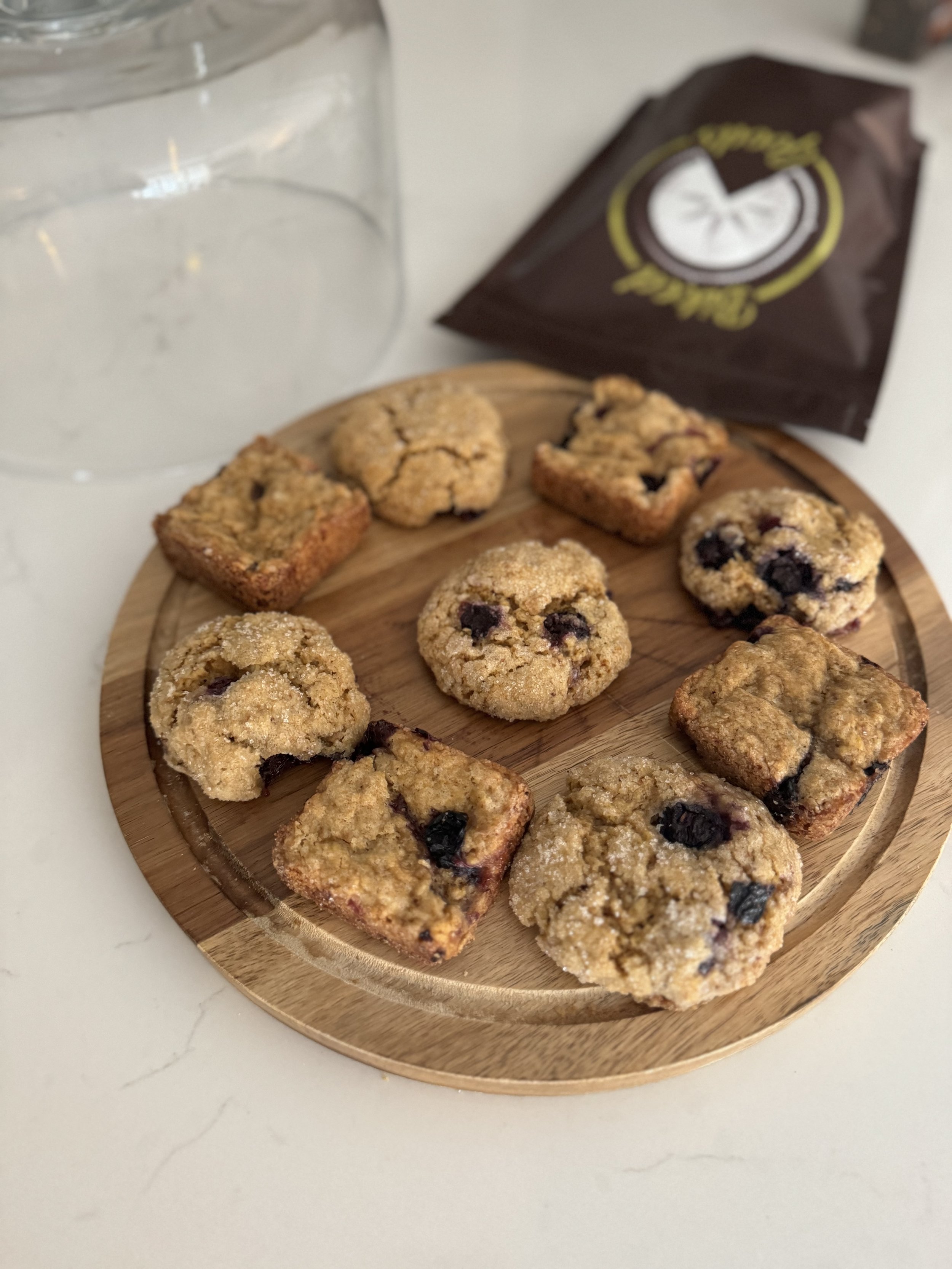
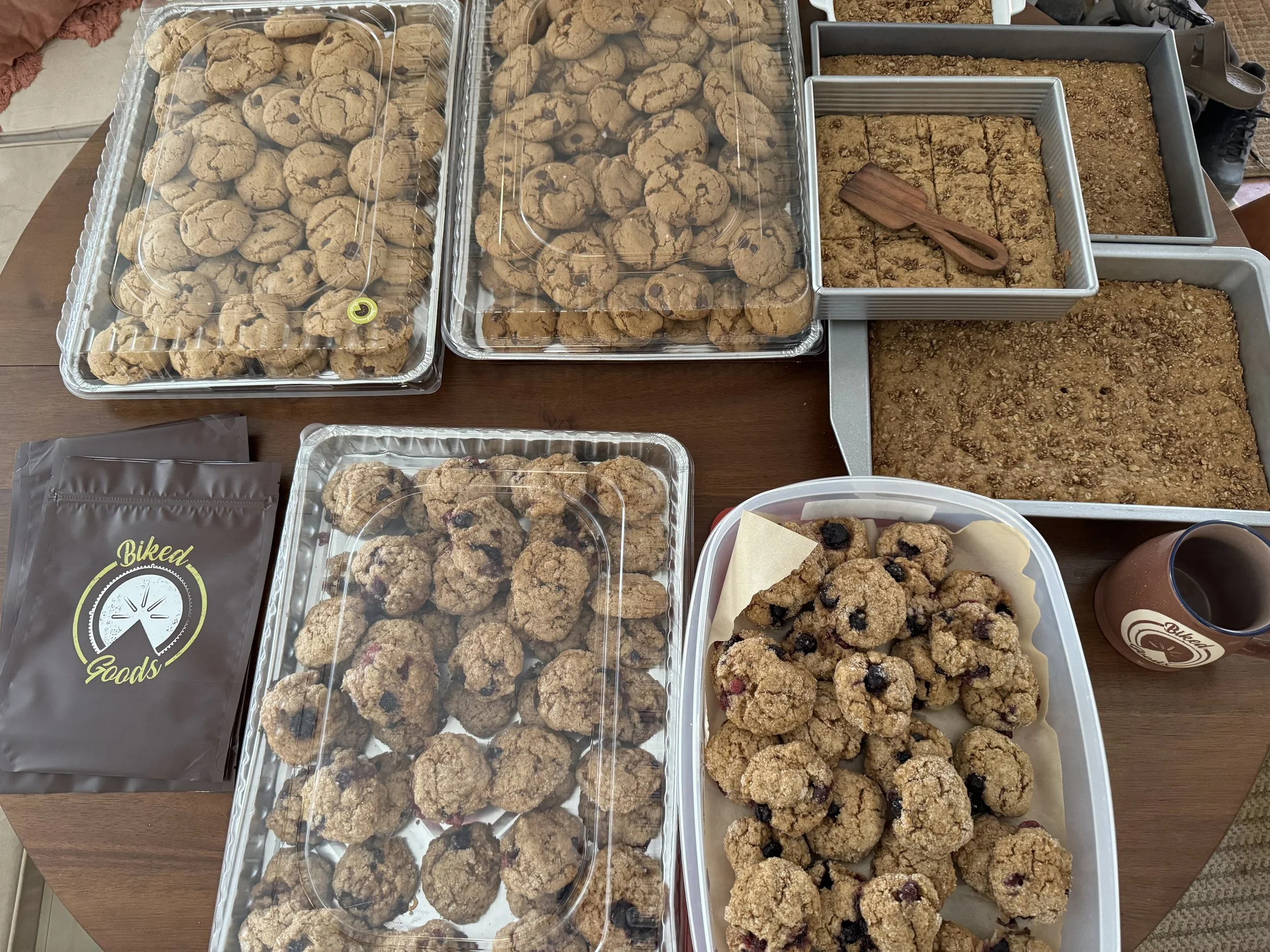
Fresh Blueberry‑Lemon Sugar Cookies made with heirloom whole‑wheat pastry flour. Sweet, tart, and perfectly portable — the ideal ride snack. Recipe found in the Bakin’ Biker ’26 Cookbook.
4. Cost Savings: Cookies Are Way More Affordable Than Store-Bought Energy Bars
Let’s break it down:
Average energy bar: $1–$3 each
Average homemade cookie: $0.35–$0.50 each
Ingredient‑cost breakdowns suggest a homemade cookie can cost as little as $0.35–$0.50 each. (Flavor365) Meanwhile, many retail endurance or energy bars sell for $1–$3 per bar. (PW Consulting) That means, even at the high end, a homemade cookie may cost ½ or less than a comparable energy bar — a significant savings over a season of riding.
Even if you use high-quality ingredients in your cookies — dates, butter, sprouted oats, heirloom flours — you’re still spending a fraction of the price.
If you ride often, this adds up big-time:
1 ride/week for a year with store-bought bars = ~$180
Same number of homemade cookies = ~$35
That’s $100–$150 saved, just by baking cookies.
5. Easy to Make, Easy to Pack, and Built for the Bike
Cookies require minimal prep time, use just a few simple ingredients, and rely on straightforward baking techniques to create something surprisingly powerful for endurance fuel.
Another plus? They hold their shape, don’t melt, travel well, and stay intact when wrapped—ideal for jersey pockets, hip pouches, or backpacks.
Combined with their real-food digestibility and steady energy, cookies make an excellent alternative to commercial energy bars.
Recipe: Ginger Chocolate Chip Cookie Energy Bars
Per 1 bar: 220 calories, 37g carbs, 9g fat, 2g protein
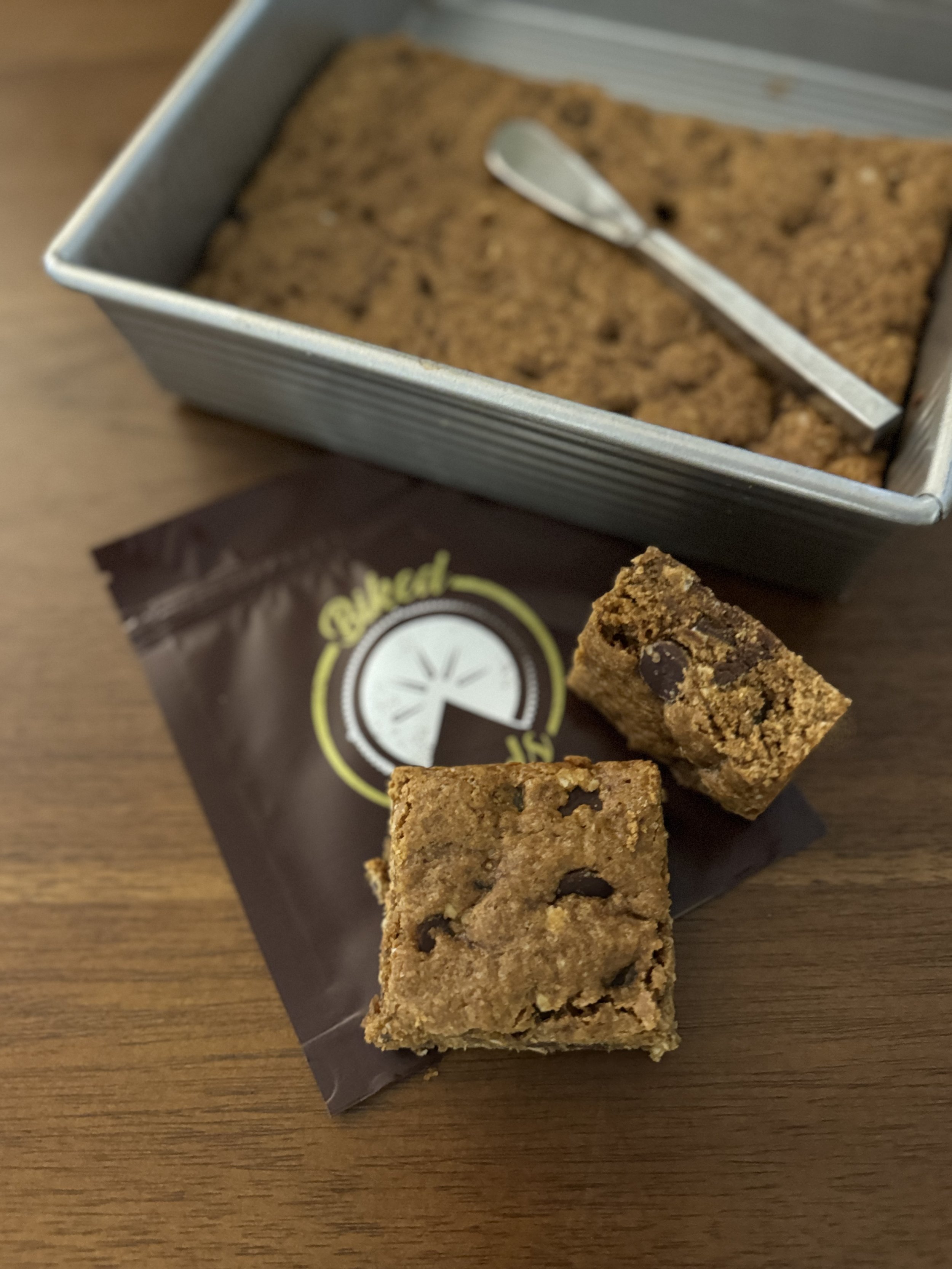
Cookie bars are easy to make + even easier to pack.
6. And Let’s Be Honest… Cookies Taste Damn Good
This might be the most important reason of all.
Fuel you want to eat is fuel you’ll actually eat. Fuel that tastes good improves compliance.
And cookies straight-up taste amazing. Warm or cold, crispy or chewy — cookies are joyful.
Joy matters in endurance sports, especially when it comes to your fuel.
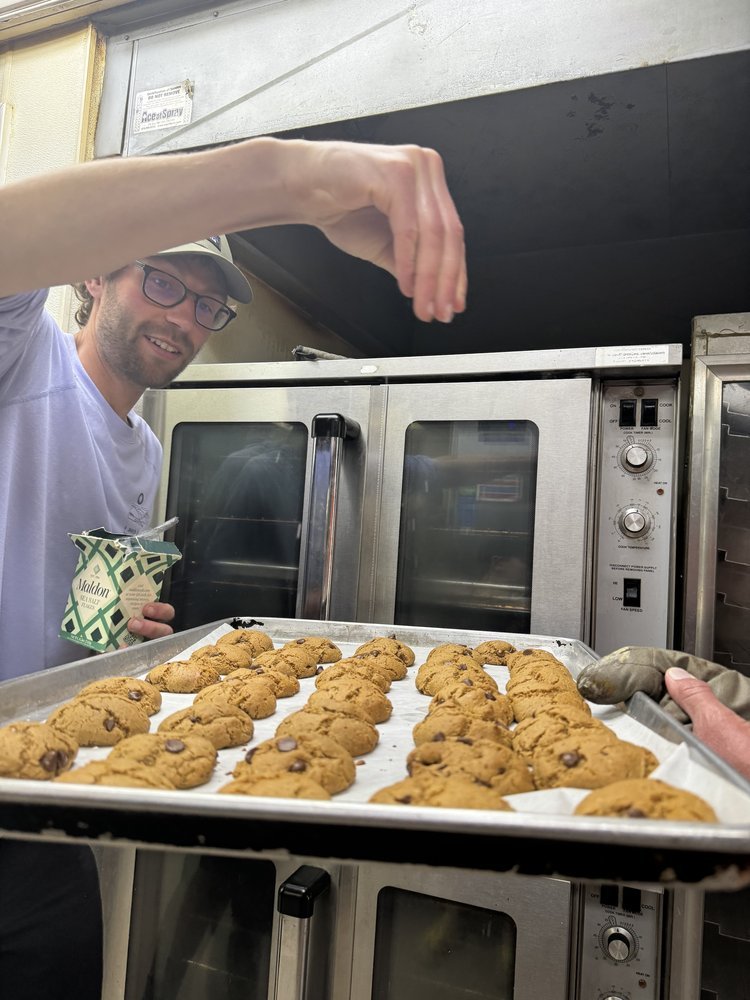
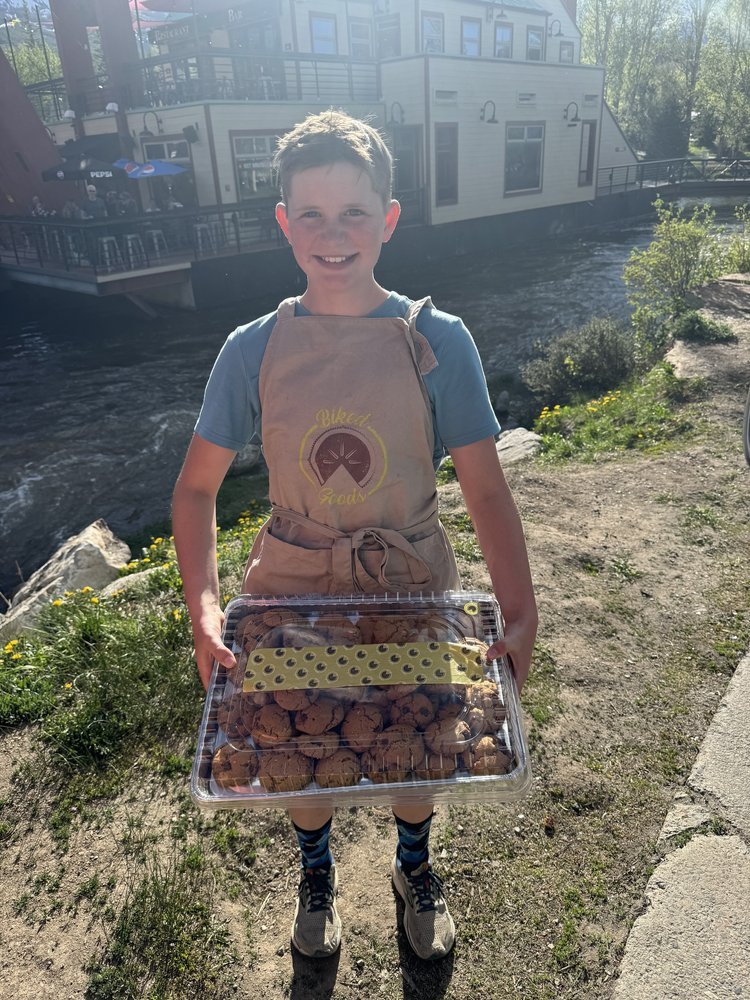
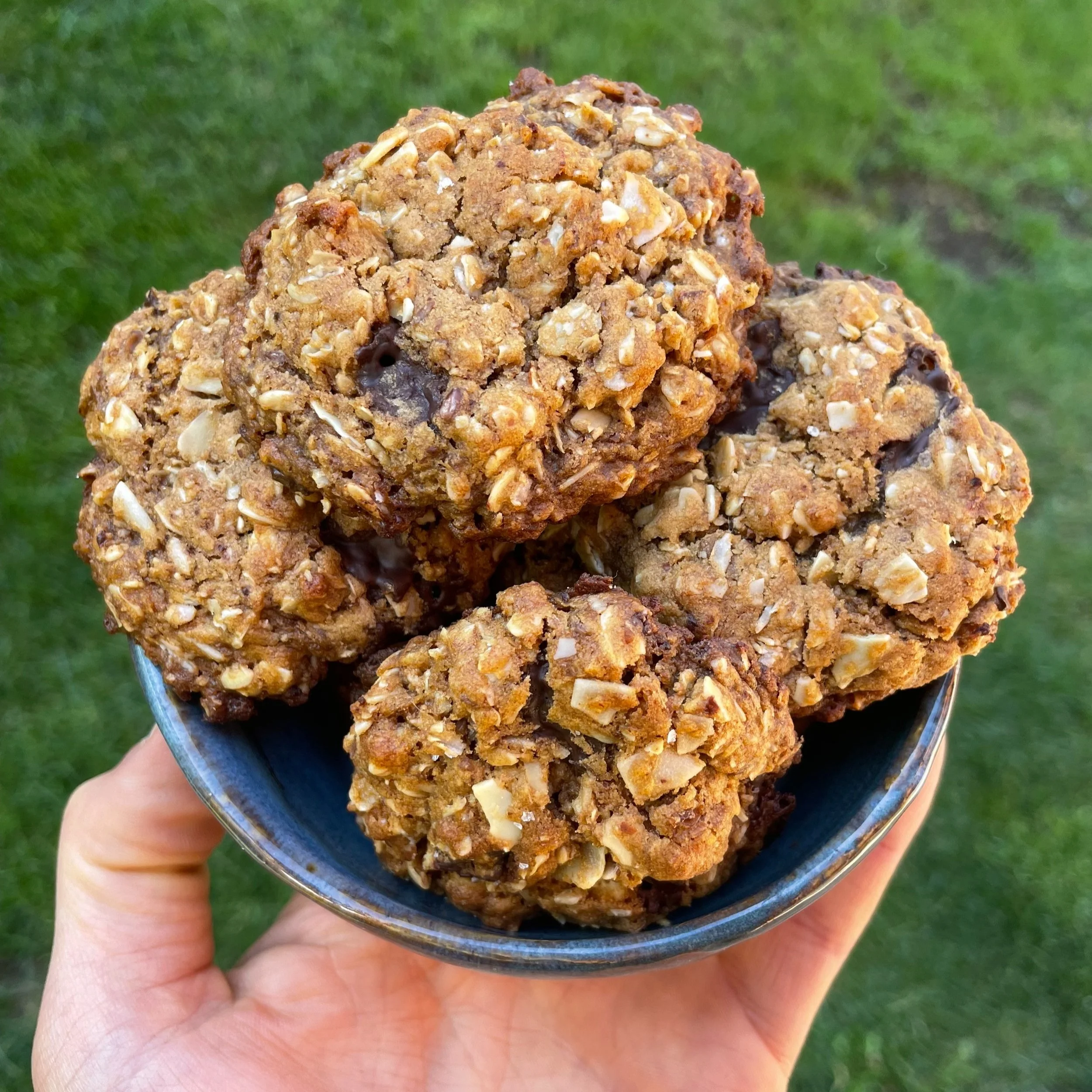
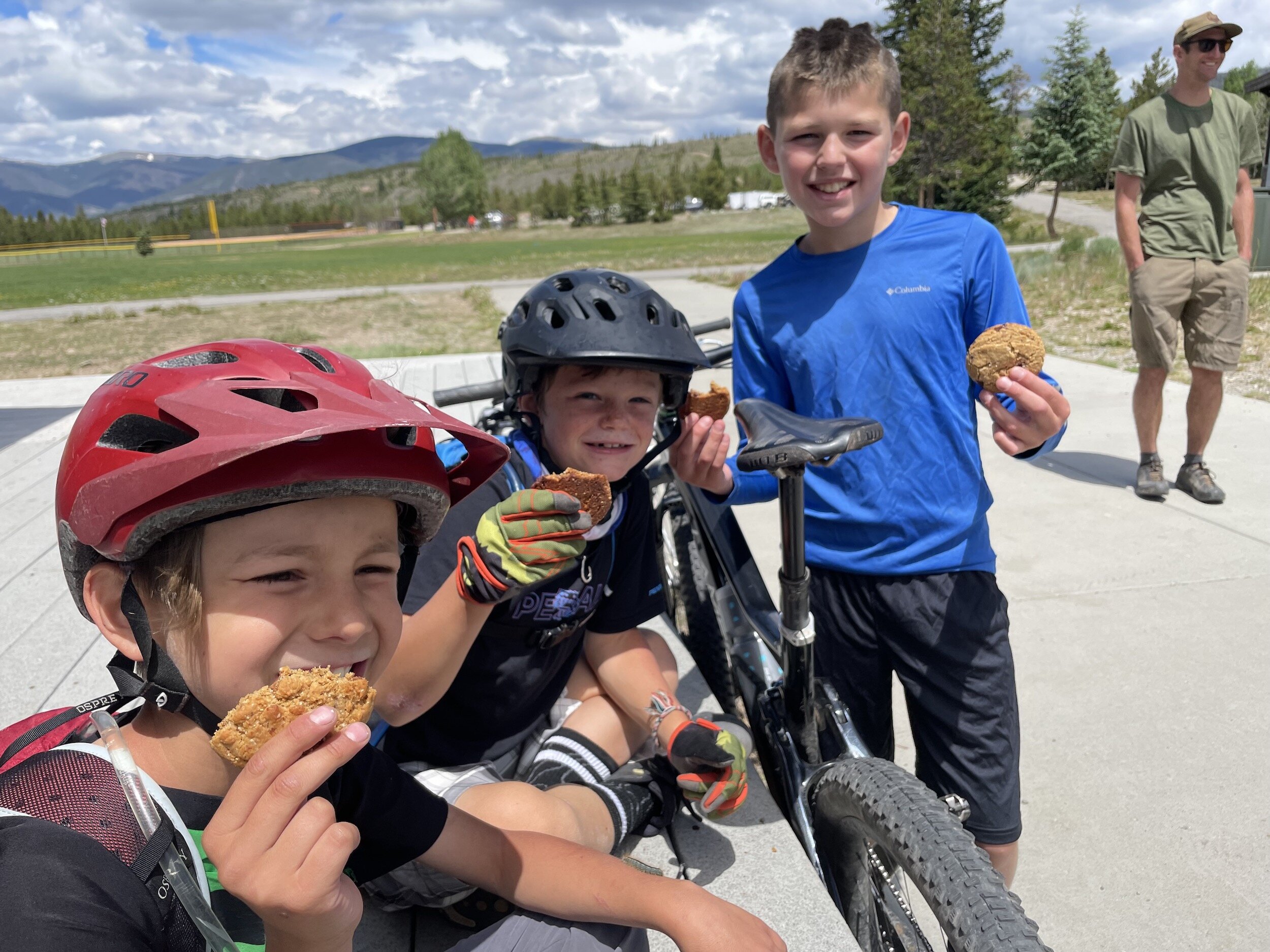
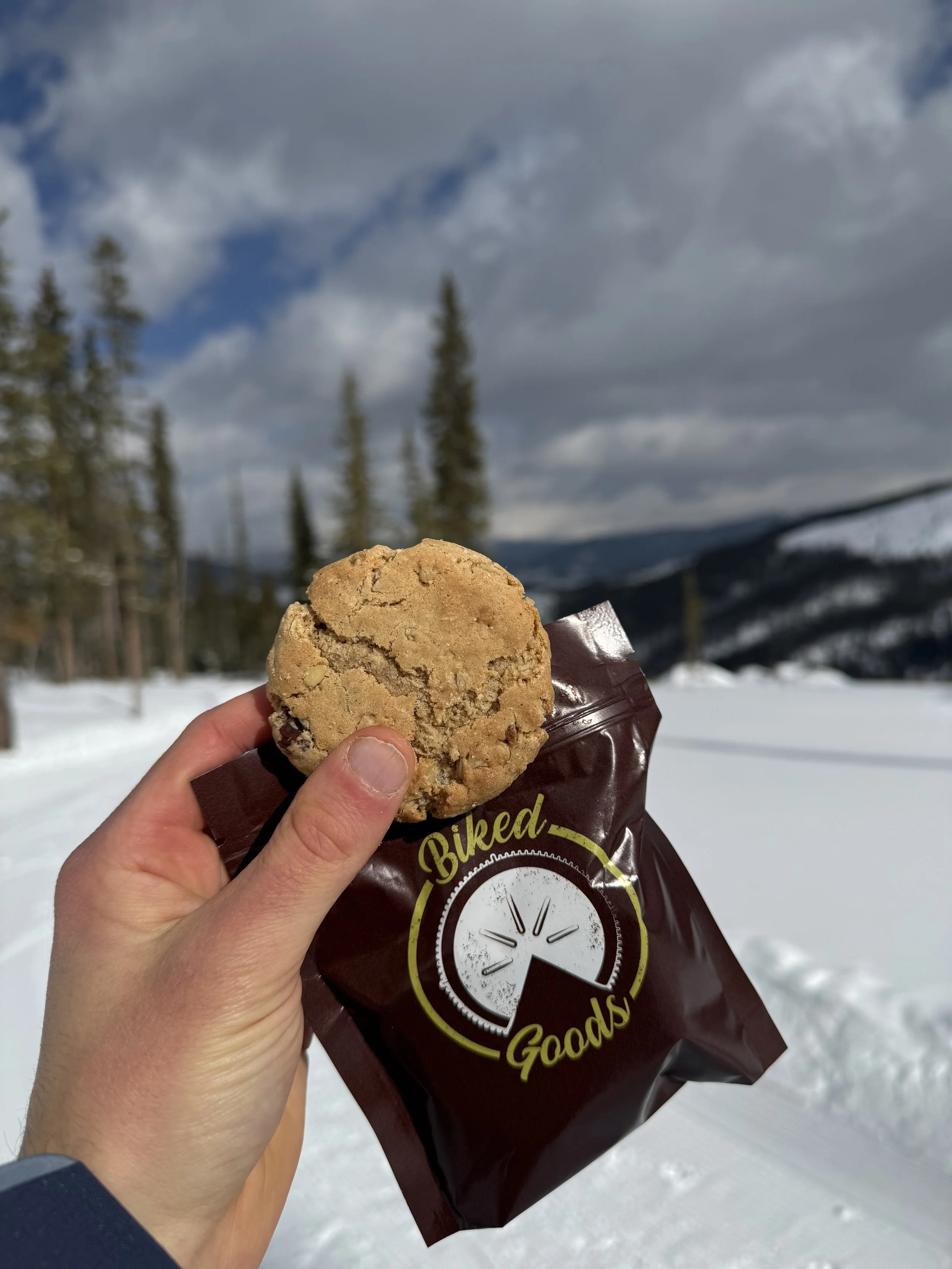
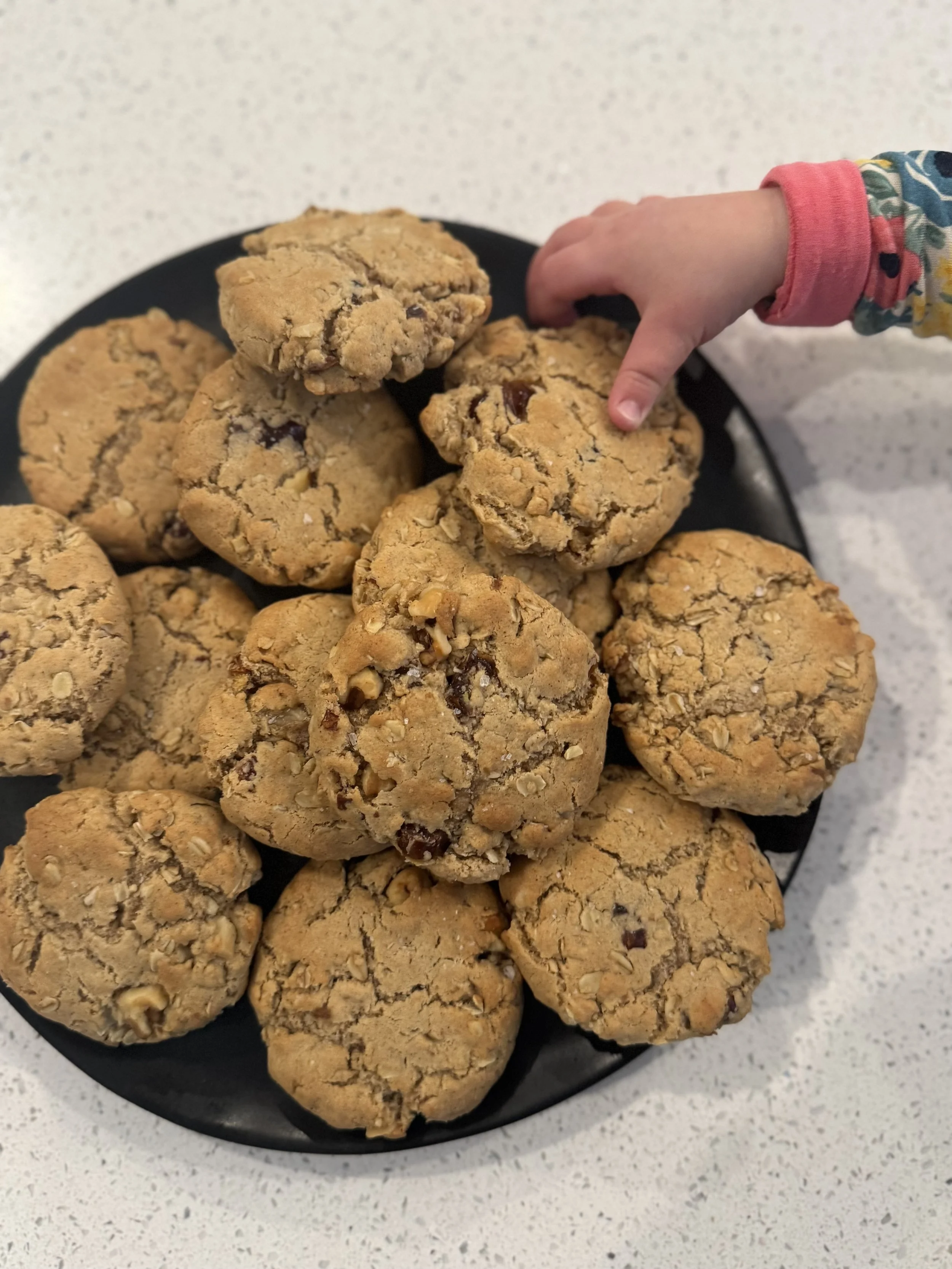
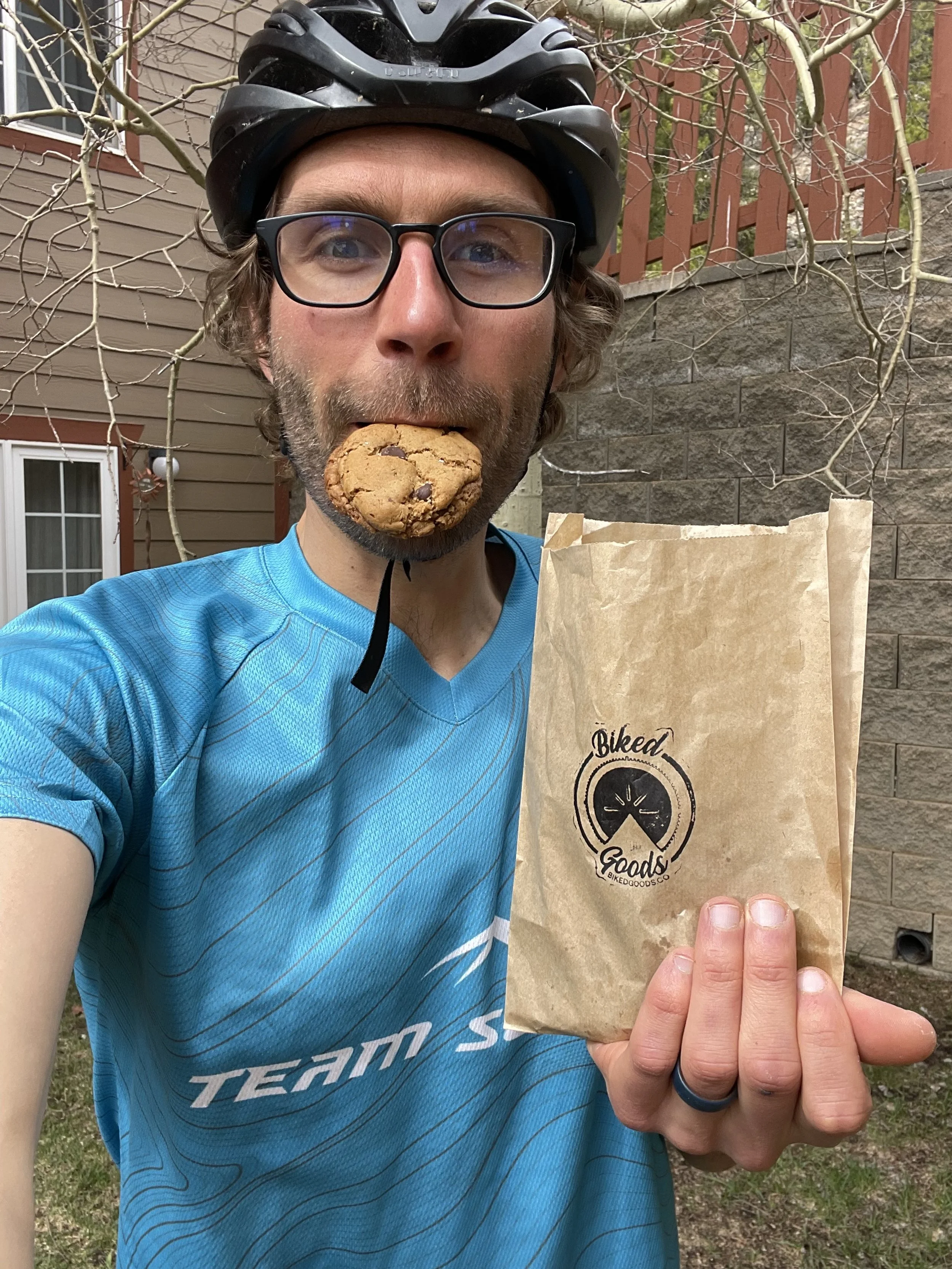
Just look at this cookie goodness below.


My Oatmeal Date Cookie Recipe
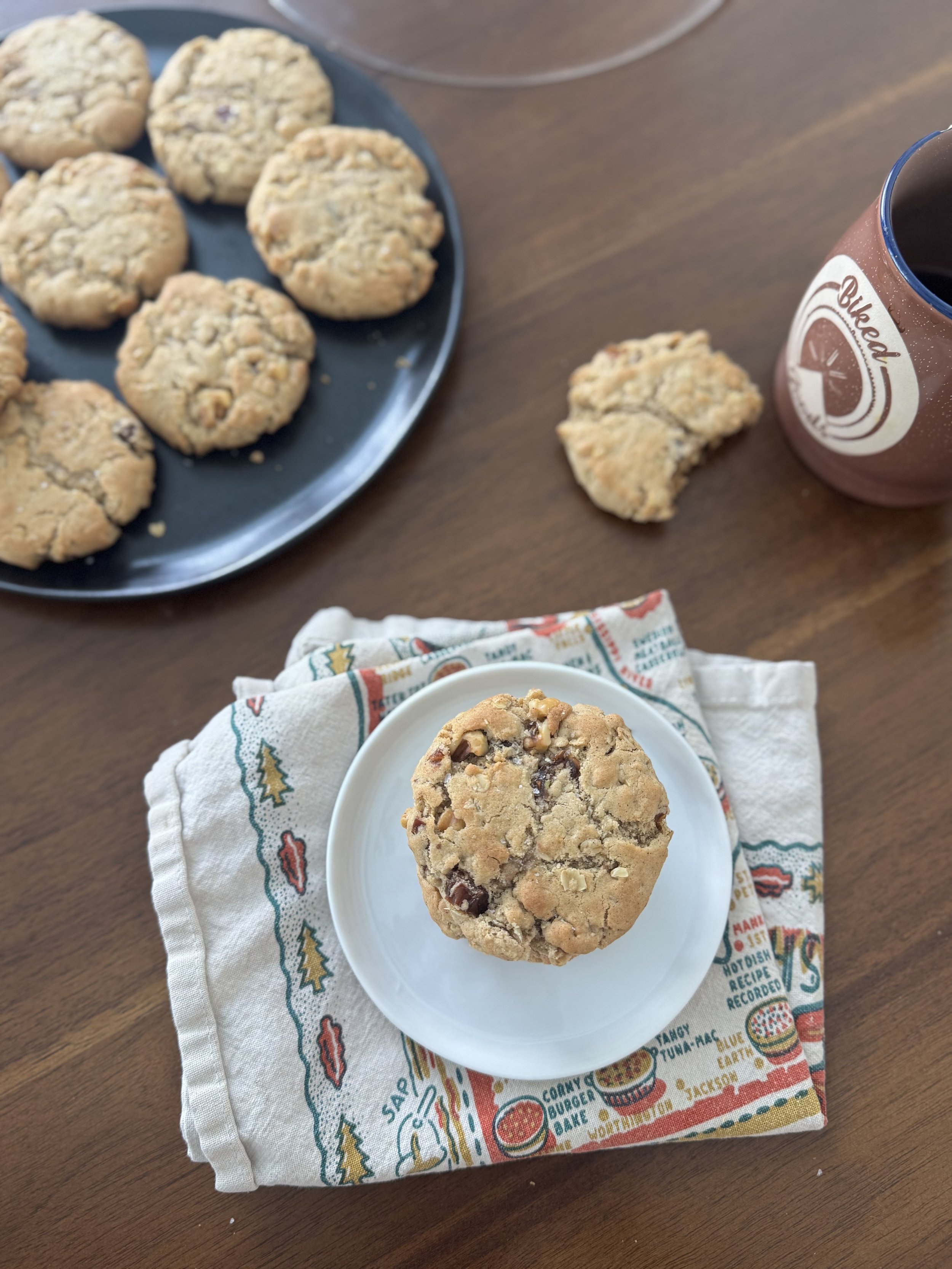
This is a featured recipe in the Bakin’ Biker ‘26 Cookbook. My homemade Oatmeal Date Cookies. Slightly crispy on the outside. Soft, chewy, and lightly spiced on the inside. Designed for ride-friendly digestibility and packability.
Makes: 14 cookies
Prep: 10 minutes + chilling
Bake: 9-12 minutes
Nutrition (Per Cookie)
200 calories · 27g carbs · 9g fat · 3g protein
Ingredients
1½ cups all-purpose flour
¾ -1 cup sprouted rolled oats
½ tsp baking powder
½ tsp baking soda
1 tsp ground cinnamon
¼ tsp ground cardamom (optional)
½ tsp fine sea salt
8 Tbsp unsalted butter, melted and slightly cooled
⅓ cup cane sugar
⅓ cup + 2 Tbsp coconut or brown sugar
1 tsp vanilla extract
1 large egg, room temp
½ cup chopped Medjool dates
⅓ cup finely chopped walnuts (optional)
Flaky salt, for finishing
Directions
Mix dry ingredients: In a medium bowl, whisk flour, oats, baking powder, baking soda, cinnamon, cardamom, and salt.
Mix wet ingredients: In a large bowl, whisk melted butter with both sugars and vanilla until smooth. Add the egg and whisk until creamy.
Combine: Add dry ingredients to the wet and fold with a spatula until almost blended. Stir in dates and walnuts if using.
Chill: Cover and refrigerate the dough for at least 1 hour (helps with texture and prevents spreading).
Bake: Preheat oven to 375°F. Line a baking sheet with parchment. Scoop into 14 dough balls, spacing them 1–1½ inches apart. Gently flatten the tops with your hand or a spatula. Bake 9–12 minutes, until lightly browned and puffed.
Finish: Press cookies gently with a spatula to flatten, sprinkle with flaky salt, and cool completely on the baking sheet.
Storage
Room temperature: Airtight container for up to 5 days
Freeze: Individually wrap and freeze for long-term storage
Ride-ready: Wrap in parchment or foil for jersey pockets.
Want More Cookies (and Real Food) to Fuel Your Rides?
The Bakin' Biker ’26 Cookbook is your new go-to source for real-food ride fuel. Inside, you’ll find 20+ portable snack recipes—cookies, cakes, bars, quick breads, and more—plus pre-ride breakfasts, smoothies, drinks, and sweet treats designed for cyclists who want to fuel smarter and enjoy what they eat.
We love the recipes. My wife has CSID which means she doesn’t have enough of the enzymes in her stomach to break down food as easily. These recipes use all natural ingredients that are easier for her to digest. I am a cyclist who enjoys saving money with the ability to make larger quantities at home over the expensive store bought nutrition for rides. - Jeff B
I'm learning so much about how to fuel my body for bikepacking. There are loads of foods I have never considered to pack. Also, lots of things I can make and freeze and just grab when I'm headed out for a ride. - Jennifer B
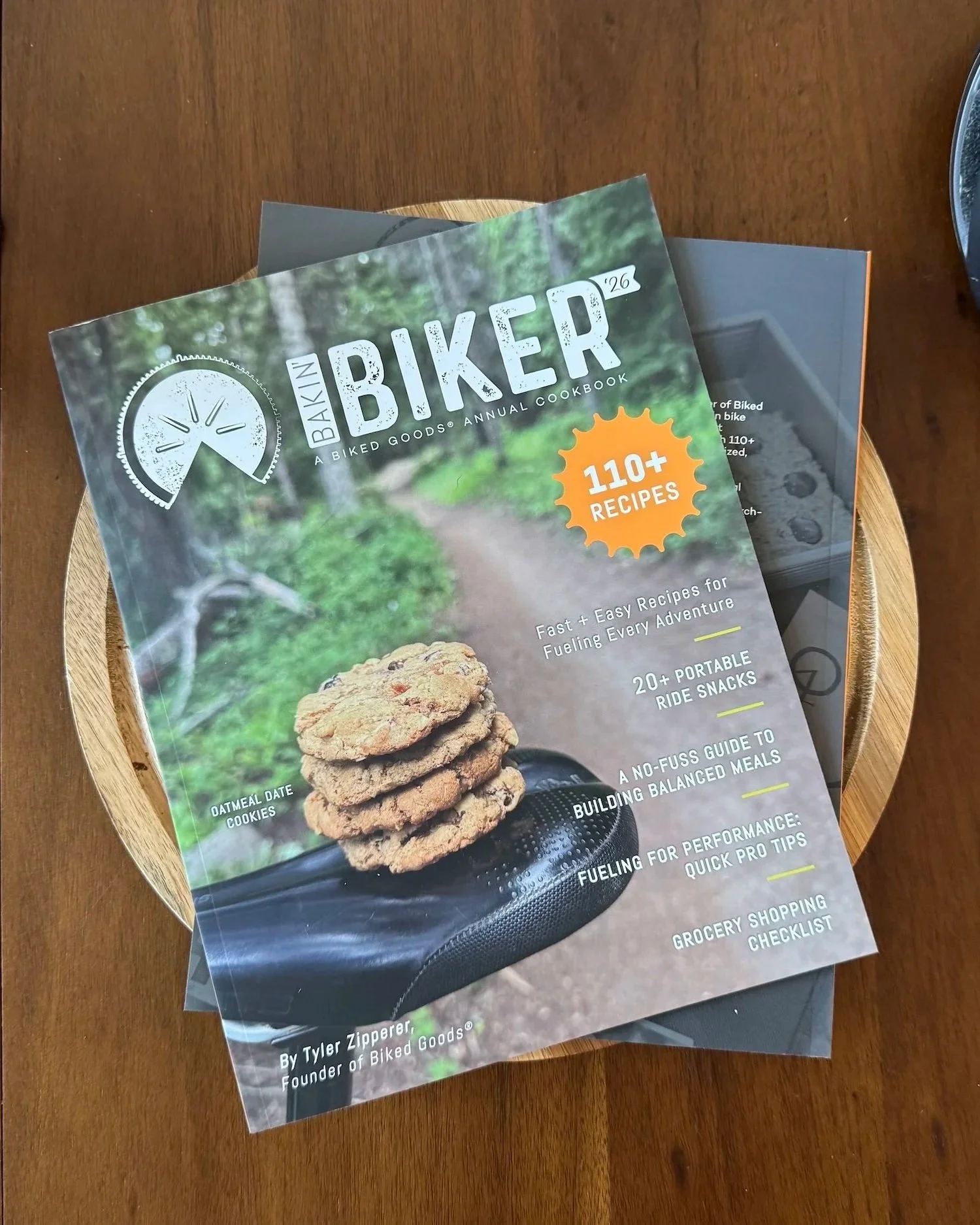
Fuel the ride of your life with Bakin’ Biker ’26. Tyler Zipperer, founder of Biked Goods®, certified nutrition coach, endurance cyclist, youth mountain bike coach, and father/husband, knows that adventure demands the right fuel—both on the bike and in everyday life.
This edition is packed with 110+ simple, packable, and nutrient-dense recipes that keep you energized, recover faster, and support long-term health.
From portable ride snacks like Sweet and Salty Rice Crispy Bars, Oatmeal Date Cookies, and Figgin’ Awesome Energy Bars, to grab-and-go snacks, weeknight dinners, and versatile staples like Seasonal Veggie Frittatas, Bircher Muesli, Perfect Pancakes, Summit Muffins, and Sustainable Power Bowls, these recipes are built for life in motion.
Bakin’ Biker ’26 reminds us that fuel isn’t just food—it’s family, community, purpose, and connection. Whether you’re tackling miles, cooking for your family, or embracing life’s adventures, this cookbook is your guide to staying nourished, inspired, and ready for the journey ahead—one bite at a time.
10% of cookbook sales are donated to help fund affordable, equitable nutrition and cycling programs for youth, especially those most in need.